
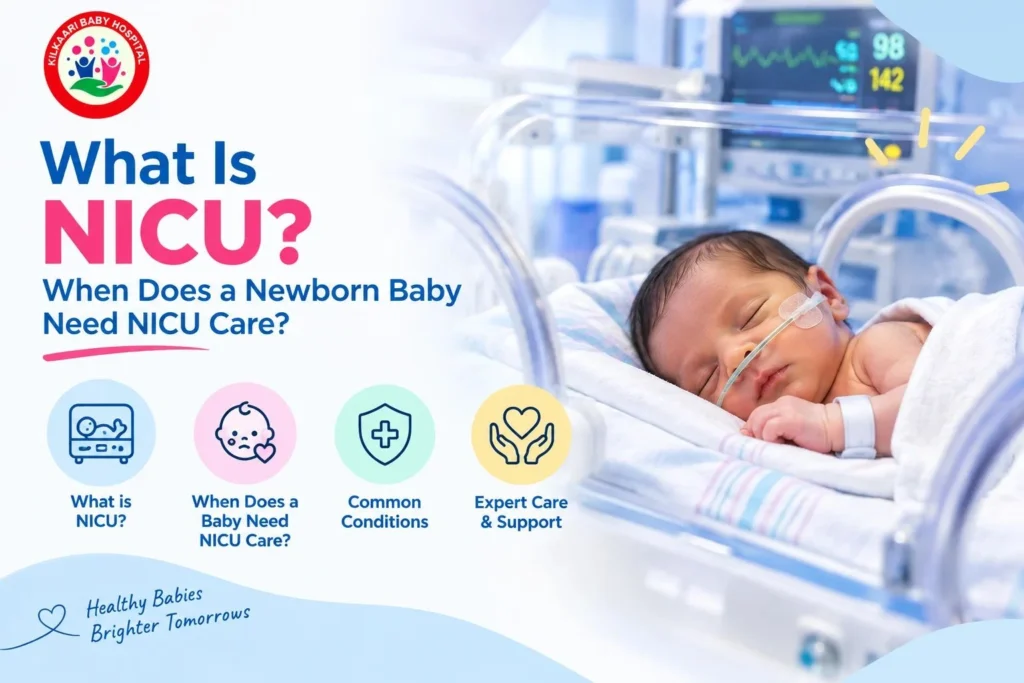
The birth of a baby is a special moment for every family. However, some newborn babies need additional medical attention immediately after birth or during the first few days of life. In such situations, doctors may recommend care in a Neonatal Intensive Care Unit (NICU). For new parents, hearing that their baby needs NICU care can be worrying. Understanding what a NICU is, why babies are admitted, and how doctors care for newborns can help parents feel more informed and prepared.
In this guide, we explain what a NICU is, when a newborn baby needs NICU care, common treatments, and what parents can expect during their baby’s hospital stay.
What Is NICU?
NICU stands for Neonatal Intensive Care Unit. It is a specialised hospital unit that provides medical care and close monitoring for premature and newborn babies, have a low birth weight, experience breathing difficulties, or have other medical conditions requiring additional support.
The NICU is staffed by trained healthcare professionals, which may include neonatologists, paediatricians, neonatal nurses and respiratory care specialists, depending on the hospital. The unit may contain specialised equipment to monitor a baby’s heart rate, breathing, oxygen levels and body temperature. Some babies require only observation and feeding support, while others need more advanced treatment.
The main goal of neonatal intensive care is to help babies receive the treatment and support they need until their condition becomes stable.
When Does a Newborn Baby Need NICU Care?
Not every newborn needs intensive care. Many babies remain with their mothers after birth and receive routine newborn care. However, certain conditions may require admission to a NICU or another specialised newborn care unit.
1. Premature Birth
A premature baby is born before completing 37 weeks of pregnancy. Babies born early may not have fully developed lungs, digestive systems or the ability to regulate their body temperature.
Depending on their gestational age and medical condition, premature babies may need help with breathing, feeding, maintaining warmth and gaining weight. Some premature babies require intensive care, while others may receive a lower level of specialised newborn care.
2. Low Birth Weight
Babies weighing less than 2.5 kg at birth are classified as having low birth weight.
Low birth weight does not automatically mean that a baby needs NICU admission. However, these babies may require closer monitoring because they can have difficulties maintaining body temperature, feeding effectively or maintaining stable blood glucose levels.
Doctors assess the baby’s weight, gestational age, feeding ability and overall health before deciding what level of care is appropriate.
3. Breathing Difficulties
Some newborns experience breathing problems immediately after birth or during their first days of life. These problems may be associated with premature birth, respiratory conditions, infection or complications during delivery.
A baby who needs additional oxygen, breathing support or continuous monitoring may require specialised neonatal care.
Signs of breathing difficulties include:
- Very fast or laboured breathing.
- Grunting sounds with each breath.
- Skin pulling in around the ribs during breathing.
- Bluish lips or tongue.
- Pauses in breathing.
These signs require urgent medical assessment. Do not wait for a routine appointment if your newborn is struggling to breathe.
4. Newborn Jaundice
Newborn jaundice occurs when bilirubin, a yellow substance produced during the breakdown of red blood cells, builds up in a baby’s blood. Mild jaundice is common in newborns, but high bilirubin levels may require prompt treatment and monitoring. Some babies need phototherapy, which uses a special light to help the body eliminate bilirubin.
A baby may require admission to a neonatal unit if bilirubin levels are very high, the baby has additional medical problems, or close monitoring and treatment are necessary. Read our related guide on newborn jaundice symptoms, causes and treatment to understand this condition in more detail.
5. Infections in Newborn Babies
Newborn babies can develop serious infections, including bloodstream infections, pneumonia or meningitis. These conditions may progress quickly and require immediate medical attention.
Doctors may recommend neonatal admission for monitoring, laboratory investigations and treatment, which may include antibiotics when a bacterial infection is suspected or confirmed.
Possible warning signs include poor feeding, unusual sleepiness, difficulty breathing, temperature instability or reduced responsiveness.
A newborn with suspected serious infection should be assessed urgently by a healthcare professional.
6. Complications During Birth
Some babies need additional support following a difficult delivery or complications that affect their breathing, circulation or overall condition.
Depending on the circumstances, doctors may recommend close observation, breathing support or further investigations in a specialised unit.
The decision depends on the baby’s condition after birth and how well the baby responds to initial treatment.
7. Low Blood Sugar or Feeding Difficulties
Some newborns, particularly premature babies and babies born to mothers with diabetes, are at increased risk of low blood glucose levels.
Other babies may struggle to coordinate sucking, swallowing and breathing, making it difficult to take enough milk.
Doctors may recommend blood glucose monitoring, feeding assistance, expressed breast milk through a feeding tube or other nutritional support when clinically necessary.
8. Congenital Conditions or Other Medical Problems
Some babies are born with conditions affecting the heart, lungs, digestive system or other organs. Others may need specialised care following surgery.
The NICU team assesses each baby individually and provides monitoring or treatment based on the specific medical needs.
What Happens Inside a NICU?
A NICU provides a controlled environment where healthcare professionals can monitor newborns and provide appropriate treatment.
Depending on the baby’s condition, care may include the following.
Incubator and Temperature Support
Premature and low-birth-weight babies may have difficulty maintaining their body temperature.
An incubator or radiant warmer helps provide a suitable thermal environment. Nurses monitor the baby’s temperature and adjust the support according to medical needs.
Breathing Support
Babies with breathing difficulties may receive oxygen, continuous positive airway pressure (CPAP) or mechanical ventilation, depending on the severity of their condition.
Not every baby in the NICU needs a ventilator. The type of support depends on the baby’s breathing and oxygen requirements.
Feeding and Nutrition
Feeding support is an important part of newborn intensive care. Breast milk is generally encouraged when suitable and available.
Babies who cannot feed safely or effectively by mouth may receive expressed breast milk through a feeding tube. Some babies with particular medical needs may require fluids or nutrition through a vein.
The medical team monitors feeding tolerance, hydration and weight gain.
Monitoring Vital Signs
NICU monitors can help healthcare professionals track a baby’s heart rate, breathing rate and oxygen saturation. Depending on the baby’s condition, staff may also monitor blood glucose, temperature, bilirubin and other measurements.
These checks help the team identify changes and respond promptly.
Treatment for Jaundice and Infections
Babies may receive phototherapy for jaundice or prescribed medication for infections and other diagnosed conditions.
Treatment is selected according to the baby’s examination, test results and clinical needs.
How Long Does a Newborn Baby Stay in the NICU?
There is no fixed length of stay for every baby. Some newborns need only a short period of observation, while others may require several days or weeks of specialised care. Very premature babies or babies with complex medical conditions may need longer hospital stays.
The duration depends on factors such as:
- The baby’s gestational age and birth weight.
- Whether the baby can breathe without significant support.
- The ability to feed safely and receive adequate nutrition.
- The ability to maintain body temperature.
- Whether infections or other medical problems have been treated.
The baby’s overall progress and follow-up needs.
Before discharge, the healthcare team assesses whether the baby is medically stable and whether the family is prepared to continue the recommended care at home.
Parents should ask the treating doctor about their baby’s individual progress rather than comparing their baby’s stay with that of another newborn.
How Can Parents Support a Baby in the NICU?
Having a baby in the NICU can be emotionally challenging. Parents may feel anxious, confused or overwhelmed by unfamiliar equipment and medical terminology.
There are several ways parents can remain involved in their baby’s care.
- Communicate with the medical team. Ask the doctors and nurses to explain your baby’s condition, treatment plan and daily progress in simple language.
- Provide breast milk when possible. If direct breastfeeding is not yet possible, ask the care team about expressing and storing breast milk safely.
- Practise kangaroo mother care when advised. Skin-to-skin contact may support warmth, bonding and breastfeeding when appropriate for the baby’s condition. Follow the NICU team’s instructions about when and how to do it.
- Follow hygiene instructions. Clean your hands before touching the baby and follow the unit’s visitor and infection-prevention rules.
- Take care of your own wellbeing. Rest when possible, seek emotional support from family and ask the healthcare team about parent-support resources.
Parents should never adjust medical equipment or attempt treatments without guidance from the healthcare team.
When Can a Baby Leave the NICU?
A baby may be ready to leave the NICU when the treating team determines that the baby’s medical needs can be safely managed outside intensive care.
Depending on the baby, discharge readiness may include:
- Stable breathing and circulation.
- Adequate feeding and hydration.
- Satisfactory temperature control.
- Appropriate weight gain or a suitable feeding plan.
- No need for hospital-only treatment or monitoring.
- A clear follow-up plan for any ongoing medical concerns.
Some babies may still need medication, feeding support or specialist appointments after discharge. Parents should understand how to provide the required care and whom to contact if problems arise.
How to Choose a Hospital for Newborn Care?
When choosing a hospital for delivery or newborn care, parents can ask about its newborn assessment services and the level of neonatal care available.
Consider asking:
- Is a paediatrician or neonatologist available when needed?
- What types of newborn monitoring and respiratory support are available?
- Is neonatal intensive care provided at the hospital, or are babies transferred elsewhere when advanced care is required?
- How are parents involved in feeding and routine care?
- What follow-up support is available after discharge?
Not every hospital provides the same level of neonatal care. If a baby needs specialised treatment that is unavailable locally, the medical team may arrange transfer to an appropriate facility.
For families in Sangrur and nearby areas, understanding these arrangements can help them discuss newborn care options with their healthcare provider before delivery.
Conclusion
A Neonatal Intensive Care Unit plays an important role in caring for newborn babies who need additional medical support. From premature birth and breathing difficulties to jaundice and infections, NICU teams provide monitoring and treatment tailored to each baby’s needs.
For parents, understanding why NICU care may be needed can make an unfamiliar experience easier to navigate. Ask questions, stay involved in your baby’s care and follow the treating team’s advice throughout the hospital stay and after discharge.
If you are preparing for your baby’s arrival, speak with your healthcare provider about newborn care, available neonatal services and the follow-up support your family may need.
Frequently Asked Questions
1. What is the full form of NICU?
NICU stands for Neonatal Intensive Care Unit. It is a specialised hospital unit that provides intensive monitoring and medical treatment for newborn babies who need additional care.
2. Why does a newborn baby need NICU care?
A newborn may need NICU care because of premature birth, low birth weight, breathing difficulties, jaundice requiring intensive treatment, suspected infection, low blood sugar or other medical conditions.
3. Do all premature babies need NICU admission?
No. The need for NICU admission depends on the baby’s gestational age, weight, breathing, feeding ability and overall condition. Some premature babies require intensive care, while others need less intensive observation and support.
4. Is NICU care painful for newborn babies?
NICU care is intended to treat medical problems and support the baby’s development. Some procedures, such as blood sampling or inserting an intravenous line, may cause discomfort. The healthcare team uses appropriate comfort measures and pain management when needed.
5. Can parents visit their baby in the NICU?
Parent access policies vary between hospitals and depend on infection-control requirements and the baby’s condition. Parents should ask the NICU team about visiting arrangements, feeding, holding and skin-to-skin contact.
6. How long does a baby stay in the NICU?
The length of stay varies. Some babies need only brief observation, while premature babies and newborns with complex conditions may need weeks or longer. Discharge depends on the baby’s medical progress and individual needs.
7. What should parents do after their baby comes home from the NICU?
Follow the discharge instructions, attend scheduled follow-up appointments, give prescribed medicines as directed and follow the recommended feeding and safe-sleep guidance. Seek urgent medical care if the baby develops breathing difficulties, becomes unusually difficult to wake, feeds poorly or shows other warning signs.
Pingback: Newborn Baby Ventilator in Sangrur | NICU Care Guide
Pingback: Newborn Breathing Problems: Signs, Causes & Treatment
Pingback: When Does a Child Need a Paediatric Ventilator?