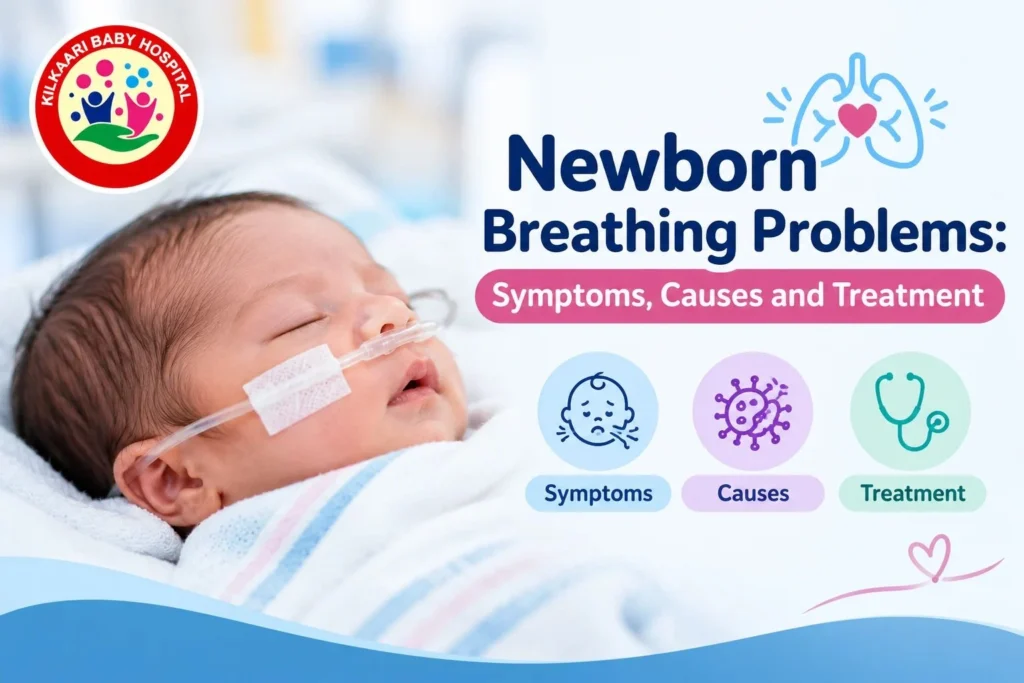
A newborn baby’s breathing may look different from an adult’s breathing, especially during the first few days after birth. Parents may notice brief pauses, changes in breathing rhythm or occasional snuffling sounds. Some variations can be normal, but certain signs may indicate a serious medical problem.
Understanding newborn breathing problems helps parents recognise warning signs and seek medical care when needed. Breathing difficulties can occur in premature babies as well as full-term newborns, and the causes can range from temporary breathing conditions to infections or problems affecting the lungs.
In this guide, we explain the common symptoms, causes and treatment options for breathing problems in newborn babies, along with signs that require urgent medical attention.
What Are Newborn Breathing Problems?
Newborn breathing problems occur when a baby has difficulty breathing normally or maintaining adequate oxygen levels. Doctors may describe significant breathing difficulty as respiratory distress.
Some babies experience breathing difficulties shortly after birth, while others develop symptoms during the following hours or days. A newborn’s condition needs prompt assessment because breathing problems can sometimes worsen quickly.
Not every irregular breathing pattern means that a baby is ill. However, parents should never ignore signs such as struggling to breathe, blue or grey lips, grunting with each breath or repeated pauses in breathing.
Important: If your newborn is struggling to breathe, has blue or grey lips or tongue, becomes unresponsive or has repeated pauses in breathing, seek emergency medical help immediately. Do not wait to finish reading this article.
What Is Normal Breathing in a Newborn?
Newborn babies generally breathe faster than older children and adults. A newborn typically breathes around 30–60 times per minute when calm.
Breathing may occasionally become irregular, with short pauses, particularly during sleep. However, prolonged pauses, repeated pauses associated with colour changes, or any signs of breathing distress are not normal and require urgent medical assessment.
To observe your baby’s breathing, look at the chest or tummy while the baby is calm. If you are concerned about fast breathing, a healthcare professional can help assess the breathing rate and determine whether further examination is needed.
Symptoms of Breathing Problems in Newborn Babies
Recognising the signs of breathing difficulty is important because newborns cannot tell parents when something is wrong.
1. Fast Breathing
Fast breathing in newborns may be a sign of a respiratory problem, particularly if it continues when the baby is calm.
A breathing rate of more than 60 breaths per minute is generally considered fast in a newborn. If you count an elevated rate, a healthcare professional should assess the baby, especially if other symptoms are present.
Do not delay medical care to repeatedly count breaths if your baby appears distressed.
2. Grunting Sounds
A baby who makes a short grunting sound with each breath may be working harder than usual to breathe.
Grunting can be a sign of respiratory distress and should be assessed urgently, particularly when accompanied by fast breathing, chest indrawing or changes in skin colour.
3. Flaring of the Nostrils
Nasal flaring occurs when a baby’s nostrils widen with each breath. This may be a sign that the baby is trying harder to draw air into the lungs.
If you notice persistent nasal flaring, seek prompt medical assessment.
4. Chest Indrawing
Chest indrawing happens when the skin between or below the ribs, or around the breastbone, pulls inward during inhalation.
This can indicate that a baby is using extra effort to breathe. Marked chest indrawing, especially with grunting or fast breathing, requires emergency medical attention.
5. Blue or Grey Lips and Skin
Blue or grey colouring around the lips, tongue or face may indicate inadequate oxygen circulation.
This is an emergency. Seek immediate medical help rather than waiting to see whether the colour improves.
6. Pauses in Breathing
Brief irregularities can occur in newborn breathing, but repeated pauses, prolonged pauses, or pauses accompanied by limpness, colour changes or difficulty waking are concerning.
Seek emergency help if your baby stops breathing or has pauses associated with signs of distress.
7. Difficulty Feeding
Some newborns with breathing difficulties struggle to coordinate sucking, swallowing and breathing. They may stop frequently during feeds, become exhausted or feed much less than usual.
Poor feeding alongside breathing changes can indicate a serious problem and needs urgent medical assessment.
Common Causes of Newborn Breathing Problems
There are several possible causes of breathing difficulties in newborn babies. The correct diagnosis depends on the baby’s age, birth history, symptoms and medical examination.
1. Premature Birth
- Premature babies are born before 37 completed weeks of pregnancy. Their lungs may not be fully developed, increasing the risk of respiratory problems.
- Premature newborns may have difficulty producing enough surfactant, a substance that helps keep the tiny air sacs in the lungs open.
- Depending on the baby’s condition, treatment may include oxygen, CPAP or mechanical ventilation in a neonatal intensive care unit (NICU).
2. Transient Tachypnea of the Newborn (TTN)
- Transient tachypnea of the newborn occurs when fluid in the baby’s lungs takes longer than expected to clear after birth.
- It can cause fast breathing and sometimes mild respiratory distress. TTN is often temporary, and many babies improve over a few days with appropriate monitoring and supportive care.
- Doctors must assess the baby to distinguish TTN from other conditions that may need different treatment.
3. Neonatal Respiratory Distress Syndrome (RDS)
- Respiratory distress syndrome is more common in premature babies whose lungs have not developed enough surfactant.
- Symptoms can include rapid breathing, grunting, nasal flaring and chest indrawing. Depending on severity, treatment may include respiratory support and surfactant replacement therapy.
4. Infection or Pneumonia
- Infections can affect a newborn’s lungs and breathing. Pneumonia and serious infections such as sepsis may cause respiratory distress, temperature changes, poor feeding or unusual sleepiness.
- Newborn infections require prompt medical evaluation. Depending on the suspected cause, doctors may recommend blood tests, cultures, antibiotics and respiratory support.
5. Meconium Aspiration Syndrome
- Meconium is a baby’s first stool. If a baby breathes meconium-contaminated fluid into the lungs before or during birth, it may cause irritation and breathing difficulties.
- Some babies need oxygen or other respiratory support, depending on the severity of the condition.
6. Congenital Heart or Lung Conditions
- Some babies are born with heart or lung conditions that affect normal breathing or oxygen circulation.
- These conditions may require specialised investigations and treatment. A doctor may recommend assessment by a paediatric cardiologist or another specialist.
7. Other Medical Conditions
- Low blood sugar, problems with temperature regulation and other medical conditions can sometimes occur alongside breathing difficulties.
- Because the causes can overlap, parents should not try to diagnose newborn breathing problems at home.
How Are Newborn Breathing Problems Diagnosed?
When a newborn has difficulty breathing, healthcare professionals assess the baby promptly to identify the cause and determine the level of support needed.
Depending on the baby’s symptoms, assessment may include:
- Physical examination: Checking breathing effort, heart rate, temperature and general condition.
- Oxygen monitoring: Using a sensor to measure oxygen saturation.
- Blood tests: Checking oxygen and carbon dioxide levels or investigating possible infection.
- Chest X-ray: Looking for signs of lung disease when clinically indicated.
- Other investigations: Additional tests may be required if a heart condition or another underlying problem is suspected.
Not every baby needs every test. The medical team chooses investigations according to the baby’s condition.
Treatment for Newborn Breathing Problems
Treatment depends on the underlying cause and how seriously the baby is affected.
- Oxygen Therapy
Some babies need additional oxygen to maintain appropriate oxygen levels. The amount and method of delivery are carefully monitored by healthcare professionals.
- CPAP (Continuous Positive Airway Pressure)
CPAP provides gentle pressure through the nose to help keep the lungs open while the baby breathes independently. It is commonly used for some newborn respiratory conditions.
- Mechanical Ventilation
A ventilator may be needed when a baby cannot breathe adequately without substantial assistance. It supports or takes over part of the work of breathing. Ventilation is used in a specialist medical setting, with close monitoring by the neonatal team.
- Surfactant Treatment
Some babies with respiratory distress syndrome need surfactant replacement therapy to help their lungs function more effectively. This treatment is given by trained healthcare professionals when clinically indicated.
- Medicines and Supportive Care
If an infection is suspected or confirmed, doctors may prescribe antibiotics. Other treatments may include fluids, feeding support, temperature regulation and close monitoring.
Some babies require admission to a neonatal intensive care unit (NICU) until their breathing improves and they are medically stable.
When Does a Newborn Need NICU Care?
Not every newborn with breathing difficulties needs the same level of treatment. However, babies who need continuous monitoring, oxygen support, CPAP, ventilation or treatment for a serious underlying condition may require NICU admission.
The NICU team can monitor the baby’s breathing, oxygen levels, heart rate, feeding and overall progress.
If your baby is experiencing breathing difficulty outside the hospital, seek emergency medical help immediately. If a transfer to another hospital is necessary, the treating medical team should arrange and coordinate it. Do not delay emergency care while comparing hospitals.
How Can Parents Reduce the Risk of Breathing Problems?
Not all newborn breathing problems can be prevented. Some are related to premature birth or medical conditions that cannot be predicted.
Parents can still take steps to support their baby’s health:
- Attend recommended antenatal appointments during pregnancy.
- Follow medical advice for managing pregnancy-related conditions.
- Avoid smoking and exposure to tobacco smoke around the baby.
- Keep newborn vaccinations and routine check-ups up to date.
- Seek prompt medical advice if the baby develops breathing changes or other concerning symptoms.
These steps support general health but cannot guarantee that a newborn will not develop a breathing condition.
Conclusion
Newborn breathing problems can have several causes, including premature birth, delayed clearance of lung fluid, respiratory distress syndrome and infections. Recognising symptoms such as fast breathing, grunting, nasal flaring, chest indrawing and blue or grey lips can help parents seek medical care promptly. Some babies recover with monitoring and supportive treatment, while others need specialised care in a NICU.
If your newborn shows signs of breathing difficulty, seek medical advice urgently. If the baby is struggling to breathe, has blue or grey lips or tongue, becomes unresponsive or has repeated pauses in breathing, seek emergency medical help immediately.
Frequently Asked Questions
1. Are irregular breathing patterns normal in newborns?
Some brief irregularities may occur, particularly during sleep. However, repeated pauses, prolonged pauses, colour changes or visible difficulty breathing require urgent medical assessment.
2. When should I worry about fast breathing in a newborn?
A breathing rate above 60 breaths per minute when calm may indicate fast breathing. If it persists or occurs with grunting, nasal flaring, chest indrawing, poor feeding or colour changes, seek urgent medical assessment. If the baby is struggling to breathe, seek emergency help immediately.
3. Can premature babies develop breathing problems?
Yes. Premature babies have a higher risk because their lungs may not be fully developed. Some need oxygen, CPAP, surfactant treatment or mechanical ventilation.
4. How are breathing problems in newborn babies treated?
Treatment depends on the cause and severity. It may include oxygen, CPAP, mechanical ventilation, surfactant treatment, antibiotics for certain infections, feeding support or NICU monitoring.
5. Does every baby with breathing difficulties need a ventilator?
No. Some babies need only monitoring or additional oxygen, while others may benefit from CPAP. Mechanical ventilation is generally used when a baby needs more substantial breathing support.
6. Can newborn breathing problems be serious?
Yes. Some causes are temporary, but others can become life-threatening without prompt treatment. Any signs of respiratory distress in a newborn should be taken seriously.
Pingback: Newborn Care After Birth: A Complete Guide for Parents